The 5-Minute Fitment Check: Offset, Brake Clearance, and Load Rating for SUVs
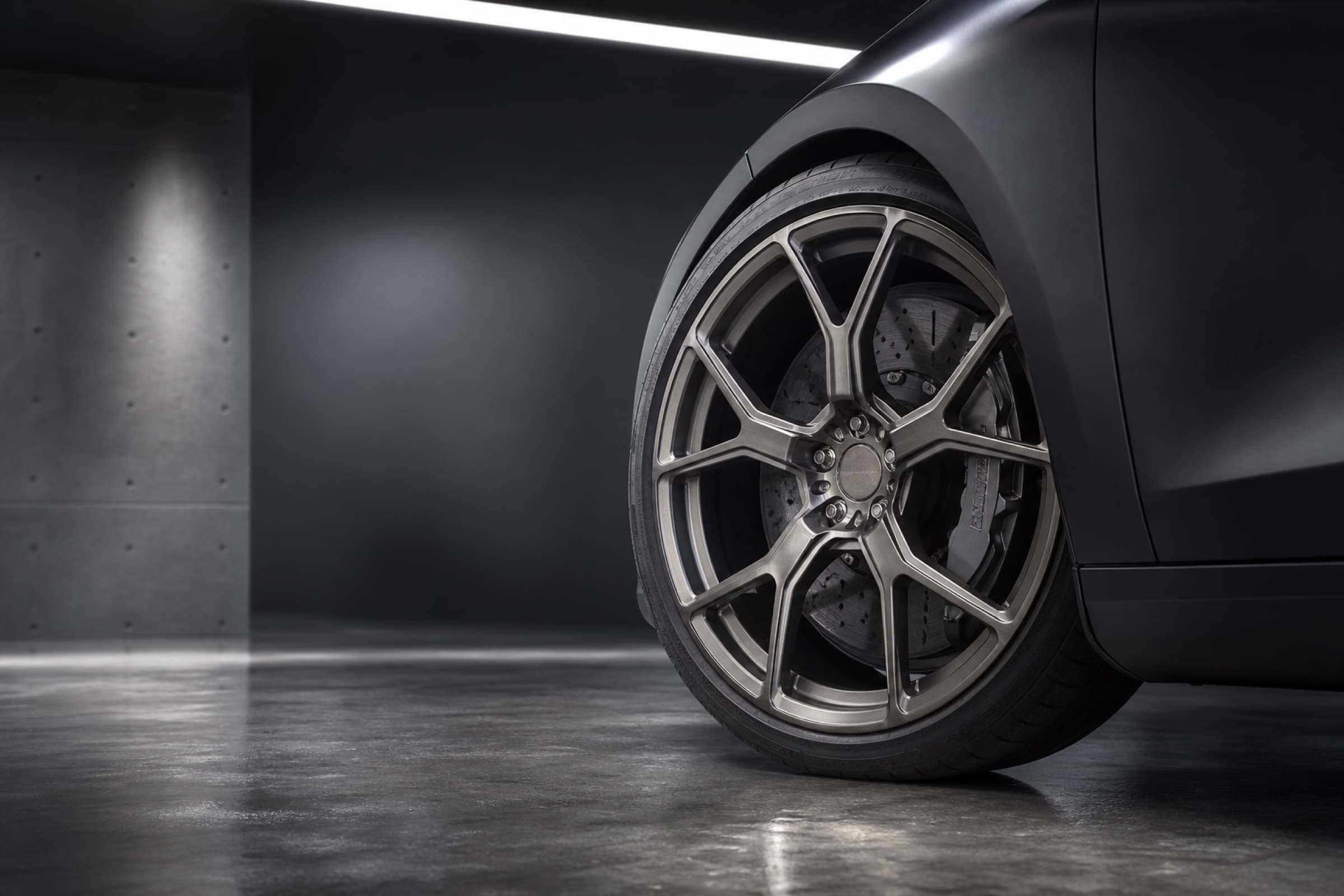
Modern performance SUVs are the hardest vehicles to fit correctly. They are heavy, their brakes are enormous, and their factory offsets keep the tire tucked deep in the fender. Get one of three numbers wrong and the result is rubbing, a caliper that will not clear the barrel, or a wheel that is simply not rated for the vehicle.
1. Offset: keep the scrub radius honest
Factory offset on a GLE 63 or X5 M is usually between ET25 and ET45. Moving more than about 15mm outward from stock changes steering feel and loads the wheel bearings harder; moving inward risks contact with suspension arms. Measure your current setup, decide how much stance you actually want, and spec the new offset from the tire sidewall inward — not from a photo of someone else's build.
2. Brake clearance: template, don't guess
Carbon-ceramic setups on the Cayenne Turbo GT and Urus Performante need both diameter and spoke-profile clearance. A wheel can bolt on and still foul the caliper under steering lock or suspension compression. We machine every Everest barrel against the caliper template for the exact vehicle — if your wheel supplier cannot tell you which brake template they used, that is your answer.
3. Load rating: the number nobody asks about
A Urus weighs over 4,800 lb before passengers. Per-corner load ratings on many cast wheels top out well below what a heavy SUV needs at full gross weight. Every Everest SUV fitment is rated at 750 kg per corner or higher, and the rating is stamped on the barrel. Check it, or do not buy the wheel.
Run these three checks and you will avoid nearly every fitment failure we see. Or skip the homework: send us the VIN and the look you want, and we will spec the numbers for you.