Monoblock vs. Two-Piece Forged: Which Construction Fits Your Build?
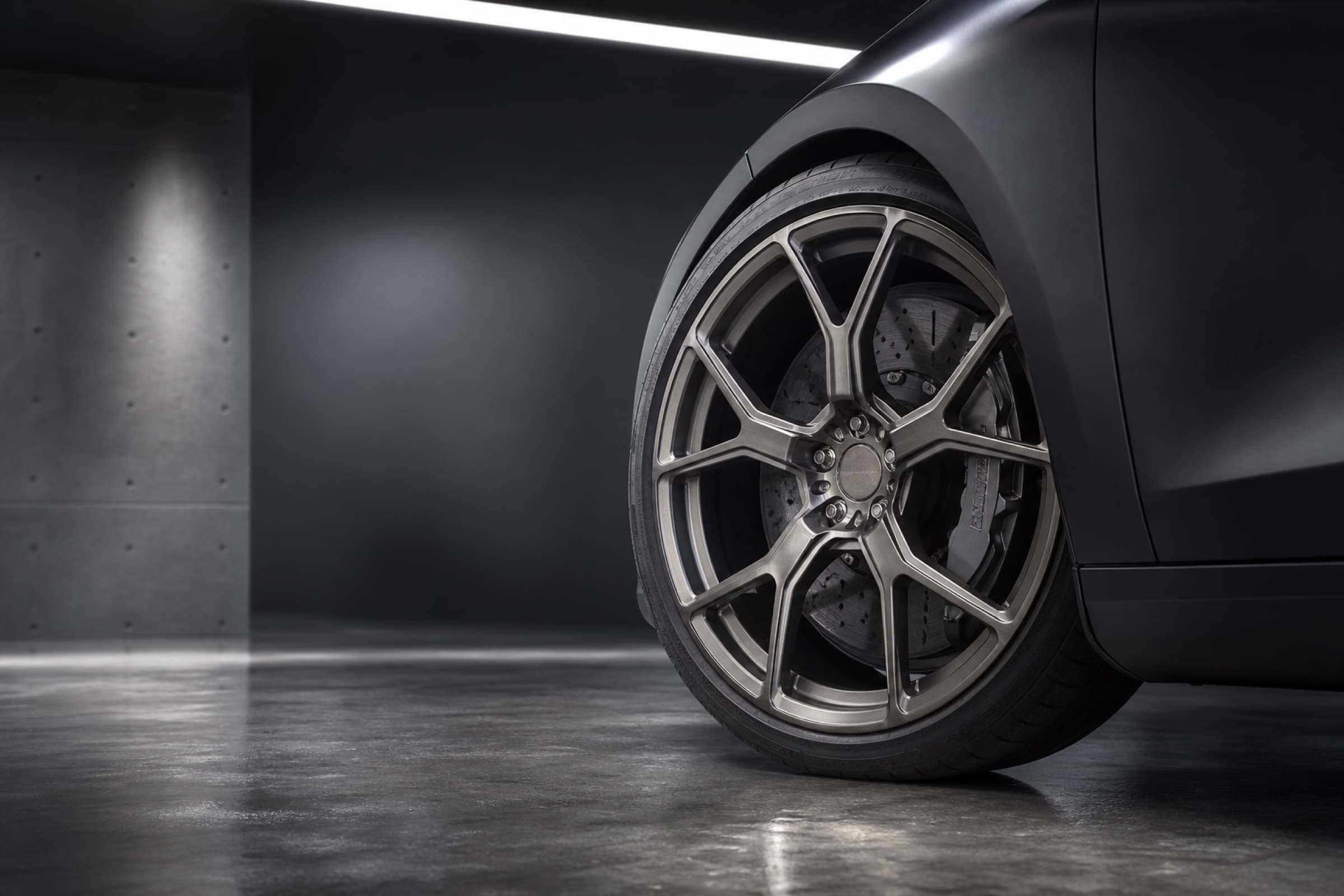
Every forged wheel starts the same way: a solid billet of 6061-T6 aluminum pressed under thousands of tons of force until the grain structure aligns. Where monoblock and two-piece designs diverge is what happens after the forge — and that difference decides which one belongs on your car.
What monoblock does best
A monoblock wheel is machined from a single forging. With no hardware, no seam, and no second piece of metal, it delivers the highest stiffness-to-weight ratio of any construction. For track builds and heavy SUVs where load rating is non-negotiable, monoblock is the default answer — it is why our Summit and Ridge series are single-piece designs rated for full-size luxury SUVs.
The trade-off is flexibility. Offset and width are machined into the wheel, so each fitment is its own program. That is fine when you order custom — every Everest wheel is made to order anyway — but it means a monoblock cannot be re-barreled into a different width later.
Where two-piece earns its hardware
A two-piece wheel bolts a forged center to a separate barrel. You give up a small amount of weight at the hardware, and in exchange you get width and offset changes without remaking the center, plus easier repairs: curb the outer barrel and you replace the barrel, not the wheel.
Two-piece also unlocks fitments a single forging cannot reach — extreme concavity with very wide barrels, or diameters beyond the press envelope. For show builds chasing a specific lip and face profile, it is often the only way to get there.
How to decide
Start with the job the wheel has to do. Daily-driven performance SUV with carbon ceramics? Monoblock — maximum stiffness, highest load margin, and the brake clearance is machined exactly to your caliper. Show car with a step-lip stance, or a build you expect to evolve? Two-piece. Either way, insist on forged centers and documented load ratings; construction matters less than the engineering behind it.